← All servicesBrand systems

Brand Creation

We create brand systems from positioning and messaging through identity, typography, color and practical application so the result feels considered rather than cosmetically expensive.

Discuss Brand Creation
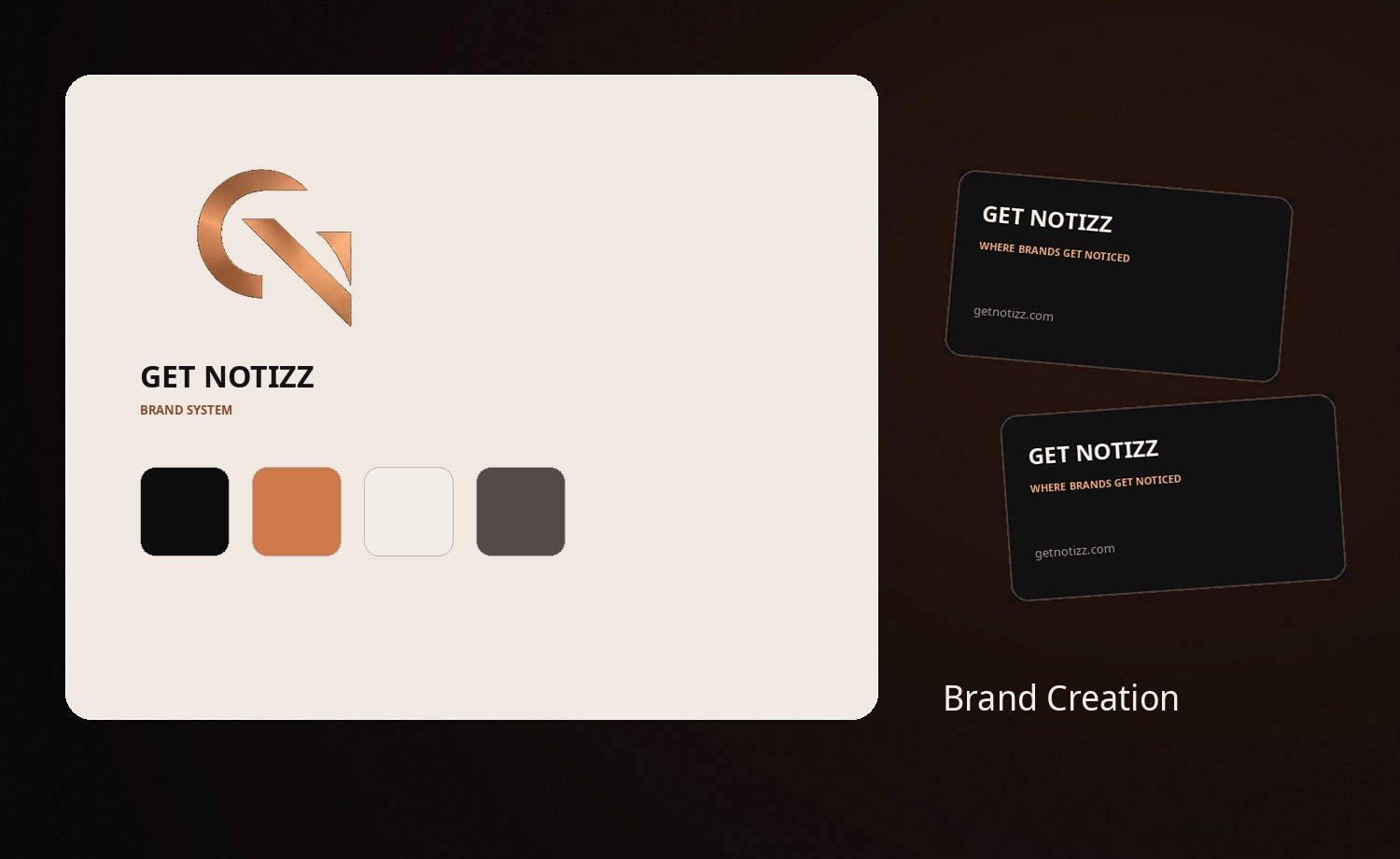
Brand Creation service visualisation
01 / The outcome
What the work is designed to change

Look distinctive because the strategy is distinctive first.

A recognizable brand with a clear point of view, coherent visual language and assets teams can use consistently.

The engagement begins with the business context: audience, offer, economics, buying journey, existing assets, internal capability and what is already working. The execution follows that logic instead of forcing every business into a standard package.

What can be included

A disciplined scope built around the brief.

The exact combination depends on the objective. These are the core building blocks we use when this service is part of the solution.

01Brand discovery and positioning
02Audience and competitor mapping
03Messaging and verbal identity
04Logo and visual identity direction
05Color and typography systems
06Brand guidelines and launch toolkit
07Campaign and collateral art direction
Detailed Brand Creation interface and output preview
02 / Brand Creation

Brand creation starts by deciding what the business should mean in the market.

Before logo exploration, we study the audience, alternatives, category conventions, buying motivations and the company's strongest credible advantage. Positioning gives the identity a reason to exist and prevents the design process from becoming a contest between personal preferences.

We define the promise, personality, message hierarchy and strategic territory the brand can own. That foundation guides naming, verbal identity and visual decisions so the finished system expresses something specific rather than simply looking polished.

03 / Brand Creation

Identity design should create recognition across many different applications.

A strong identity is more than a primary logo. Typography, color, composition, image direction, graphic devices, motion and tone all contribute to recognition. We design these elements to work across websites, social content, sales material, advertising, signage and internal documents.

The system needs enough consistency to feel coherent and enough flexibility to remain interesting. That balance is especially important for brands producing frequent content because rigid templates create visual fatigue quickly.

04 / Brand Creation

Premium design is created through proportion, detail and restraint.

Luxury is not a gold gradient applied to every asset. It is the confidence to use space, hierarchy and materials carefully. We consider how the identity behaves at small sizes, on screens, in print and in motion so the quality survives outside the presentation deck.

Mockups are used to test the brand in believable environments rather than decorate the pitch. Seeing the system on a website, business card, campaign, packaging or signage reveals whether the identity has enough range to support the business.

05 / Brand Creation

Guidelines turn the identity into a system teams can actually use.

We document logo rules, typography, color, imagery, layout principles, examples and practical templates so future work can remain consistent. Guidelines are written to help people make decisions, not to create a rulebook so complicated that everyone ignores it.

When launch support is included, we help translate the identity into priority touchpoints and establish the visual standard before internal teams or external partners begin producing large volumes of new material.
How the work moves

Enough process to create quality. Not enough to create theatre.

Each stage exists to remove assumptions, improve the work and keep progress visible.

01

Find the truth

We identify what the brand can credibly own, who needs to care and where competitors already sound identical.

02

Shape the story

Positioning, promise, personality and message hierarchy create the strategic spine.

03

Design the system

Identity, typography, color and visual behaviors are developed as a flexible system.

04

Make it usable

Guidelines, templates and real-world applications turn the identity into something teams can execute.

Questions

Useful things to know before we start.

A strong brief usually starts with fewer assumptions and better questions.

No. A logo without positioning, messaging and an application system is rarely enough to build a premium brand.

Yes. We can evolve an identity without discarding useful recognition when a full reset is unnecessary.

Yes. The system is documented so future creative work has clear rules without becoming rigid.

A good place to begin

Make the next version of your brand harder to ignore.

Bring us the growth problem, the positioning problem, the scattered channels or the website that no longer feels like the business it represents.

Talk to us