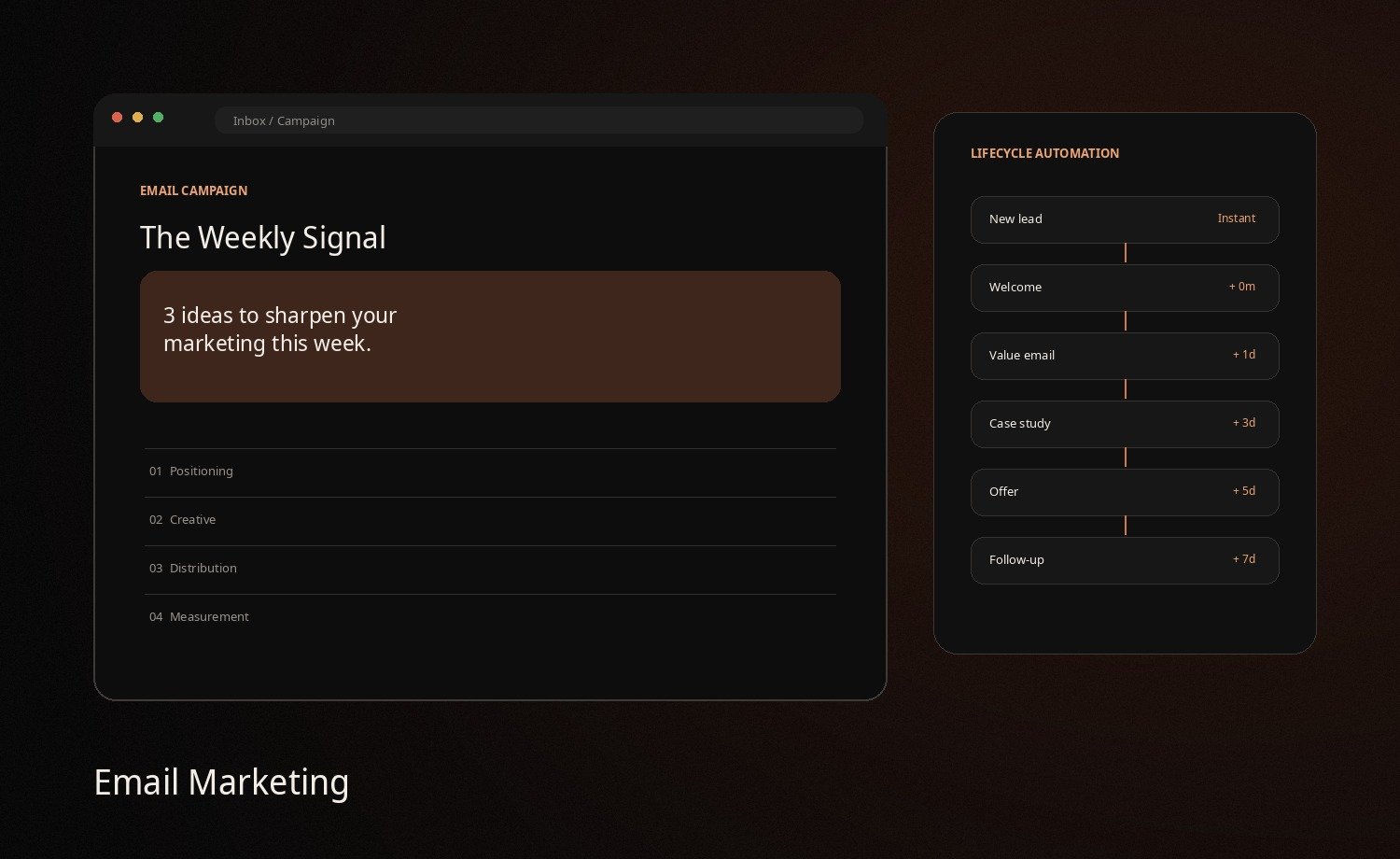
02 / Email MarketingEmail becomes more powerful when it is designed around customer states.
A new lead, active opportunity, first-time customer, repeat customer and dormant subscriber do not need the same message. We map the lifecycle and create communication around the events that change what the customer needs to hear next.
This structure reduces dependence on broadcast campaigns. Automated sequences handle predictable moments while editorial campaigns create fresh reasons to engage. Both use the same brand voice and design system so the channel feels intentional instead of transactional.
03 / Email MarketingAutomation should feel timely, not robotic.
Welcome flows, lead nurture, abandoned journeys, post-purchase communication, reactivation and reminder sequences are triggered by meaningful behavior. Timing, frequency and exit rules are planned carefully so customers do not receive contradictory or excessive messages.
Good automation removes manual work without removing context. CRM data and segmentation can personalize messages based on source, service interest, customer status or behavior, making follow-up more relevant without creating an unmanageable system.
04 / Email MarketingCampaign design should balance clarity with brand character.
Email is a conversion channel, but that does not mean every message should look like a discount flyer. We create modular templates that preserve hierarchy, readability and responsive behavior while giving the brand enough visual presence to be recognisable in the inbox.
Copy is structured around one primary action. Subject lines, preview text, opening context, body sections and calls to action work together. The visual design supports the message instead of competing with it.
05 / Email MarketingPerformance should be evaluated beyond open rate.
Privacy changes have made open rate less reliable as a standalone measure. We look at clicks, progression, replies, conversion, revenue contribution, unsubscribe behavior and the performance of specific segments or lifecycle stages.
Testing focuses on meaningful variables such as offer, content angle, timing, sequence structure and call to action. The email program gets stronger as it learns which messages move different audiences forward.