02 / Brand CreationBrand creation starts by deciding what the business should mean in the market.
Before logo exploration, we study the audience, alternatives, category conventions, buying motivations and the company's strongest credible advantage. Positioning gives the identity a reason to exist and prevents the design process from becoming a contest between personal preferences.
We define the promise, personality, message hierarchy and strategic territory the brand can own. That foundation guides naming, verbal identity and visual decisions so the finished system expresses something specific rather than simply looking polished.
03 / Brand CreationIdentity design should create recognition across many different applications.
A strong identity is more than a primary logo. Typography, color, composition, image direction, graphic devices, motion and tone all contribute to recognition. We design these elements to work across websites, social content, sales material, advertising, signage and internal documents.
The system needs enough consistency to feel coherent and enough flexibility to remain interesting. That balance is especially important for brands producing frequent content because rigid templates create visual fatigue quickly.
04 / Brand CreationPremium design is created through proportion, detail and restraint.
Luxury is not a gold gradient applied to every asset. It is the confidence to use space, hierarchy and materials carefully. We consider how the identity behaves at small sizes, on screens, in print and in motion so the quality survives outside the presentation deck.
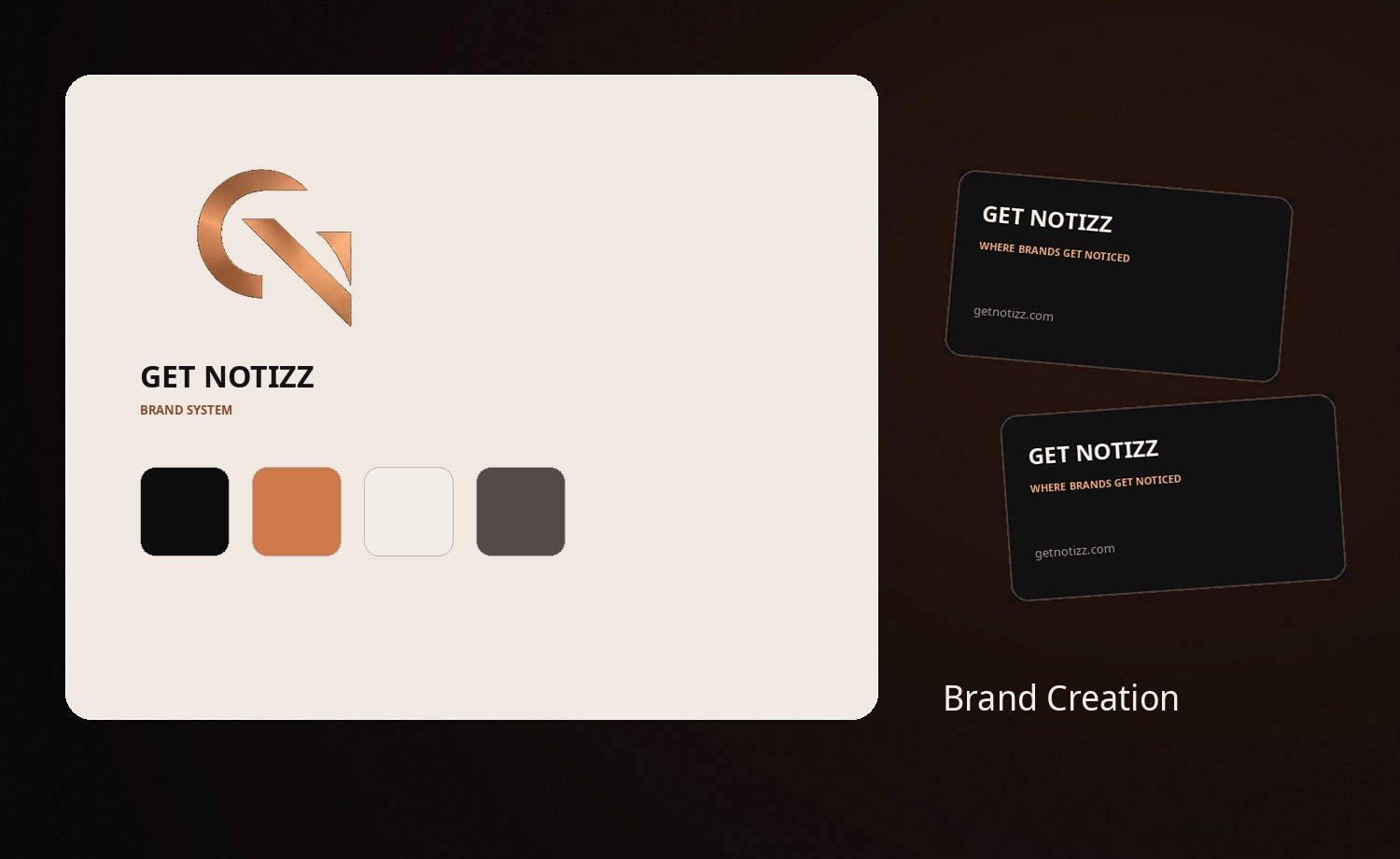
Mockups are used to test the brand in believable environments rather than decorate the pitch. Seeing the system on a website, business card, campaign, packaging or signage reveals whether the identity has enough range to support the business.
05 / Brand CreationGuidelines turn the identity into a system teams can actually use.
We document logo rules, typography, color, imagery, layout principles, examples and practical templates so future work can remain consistent. Guidelines are written to help people make decisions, not to create a rulebook so complicated that everyone ignores it.
When launch support is included, we help translate the identity into priority touchpoints and establish the visual standard before internal teams or external partners begin producing large volumes of new material.